by Maureen McGarry 6/10/23
Packed up with shiny beads, spools of thin elastic chord, and tiny metal clasps, I headed to the border in early June to offer a special art project to migrants waiting in Mexicali shelters. As summer approached and desert temperatures rose, I thought it would be a good idea to bring a calm and simple craft activity. Along with a lovely variety of beads donated by local jewelers and crafters, Humboldt residents contributed twenty mister kits (worth $800) to be installed in the migrant shelters before the extreme heat arrives in July and August. Temperatures can drop as much as twenty degrees in a contained area as water sprays through tiny nozzles connected within a small hose. Other donated items filling my car included $600 of new underwear for men, women, and children, and approximately $400 of dry goods such as beans, rice, masa, and oatmeal. Another generous donor gave several bags of personal hygiene items.
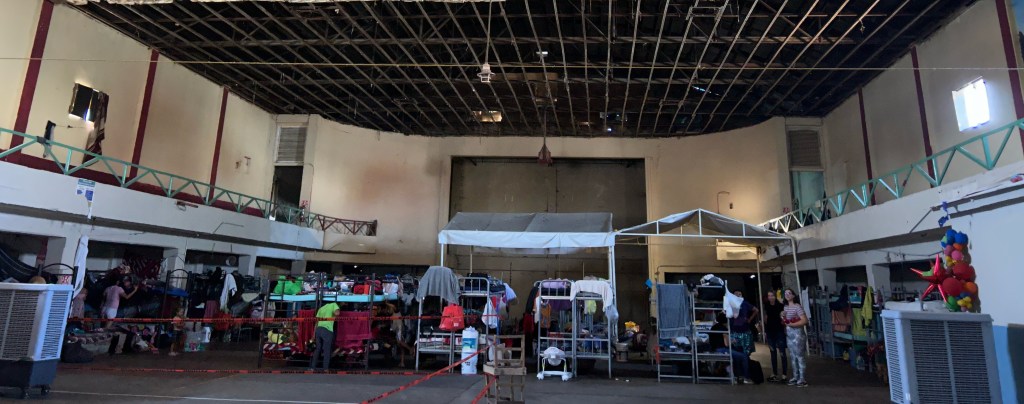
Meeting up with my friend Hugo Castro at the Calexico/Mexicali Port of Entry, we headed to the Hilo Prodigo Shelter where close to 200 migrants reside. The beads were a hit! Starting with just the kids, the mood was calm with lots of quiet focus. Adults eventually joined in. Each person got a piece of felt to keep their beads from rolling around and began stringing them. One woman said she had been there for months and had been very bored. She was now very excited because her asylum appointment with immigration was in a few days. She strung an alternating pattern of blue and black beads into a lovely necklace.

We met a family from Honduras who left their country because of violence and corruption. The woman’s brother had been killed, and she and her husband left because it was too dangerous to stay living there with their children. As refugees, they applied for asylum and have been waiting in the shelter for several months. They have relatives in New Orleans, and hope to move there once their asylum claim is processed.
Since the U.S. ended Title 42, (the Trump-era Covid policy which slowed asylum claim processing down to a trickle,) the new Biden policy has increased the asylum application process by as much as 1200 appointments per day. Seven families were able to cross the border from the Hilo Prodigo Shelter that day.
After two and half hours of beading and visiting, Hugo and I drove to a smaller shelter, Refugio Del Migrante. In 2021, the roof of this 40-room cinder block building caught on fire. No one was hurt, but migrants were displaced, and several lost their documents in the fire. Repairs were made, and migrants have returned, but the building is fire-scarred and still in need of some repairs. Two long courtyards separate the rows of the small rooms. This looked like a perfect location for installing misters. The migrants were thankful and surprised as we handed them several kits. They promised to send photos when they have the misters installed. It was 103 degrees that day. Hotter days are yet to come.

Returning to Posada Del Migrante, a shelter we visited this past February, we found that two-thirds of the migrants had traveled to Tijuana to camp out at the San Ysidro Port of Entry due to a misguided post on WhatsApp. Migrants were told to apply for asylum there, claiming they would all get through. After finding that effort unsuccessful, most of the migrants were resettled in Tijuana shelters.
There were still many children in this shelter, and they all appeared as we set up tables in a shaded part of the courtyard. We passed out more pieces of felt and a wide array of donated beads, and the process began again.

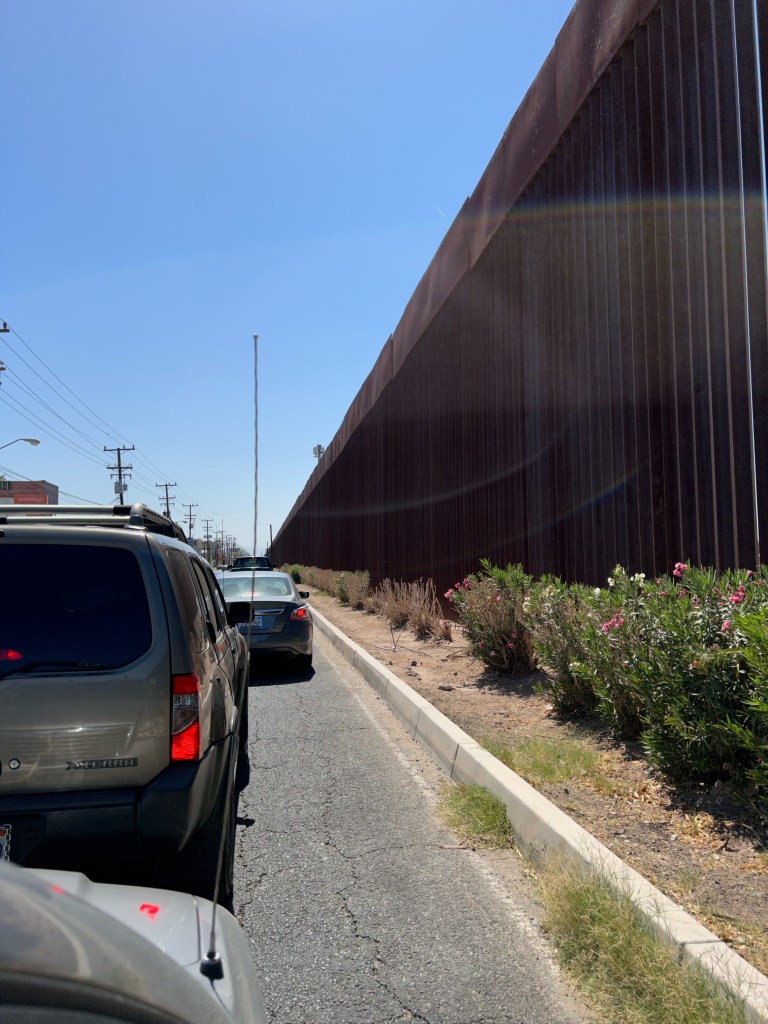
After two hours of beading, we drove to the border wall to join a line of cars about a mile long. Inching our way for three hours along the tall rust-colored fence that separates Mexico and the United States, we finally crossed through at 6 p.m. After saying goodbye to Hugo in Calexico, Siri guided me through long, narrow, empty roads past many large fields stacked with hay bales or filled with date palms. I thought of all the farmworkers who harvest in that intense heat as high as 120 degree in midsummer. Farmworkers start working at 3 or 4 in the morning, and often end their workdays by 10 am.
As I drove toward a warm-colored sky melting behind the jagged horizon of the silhouetted mountains surrounding the Coachella Valley, I felt hope for the migrants now waiting to enter the U.S. The process has improved. But I also know more refugees will come to escape violence, corruption, and poverty, and will replace those who have crossed. Once those migrants reach the border, they will wait like the others in the numerous shelters in Mexico for their American Dream.
 Maureen McGarry