As I made my way to the border for my tenth trip since the summer of 2019, I had plenty of time to reflect on my visits there, the people I met, the art projects we did together, and my experience of witnessing the constant need for the basics of survival. Most significantly, I have etched into my memory the look in the eyes of the children, holding the imprint on their developing lives as refugees.
My February trip was delayed due to a major car repair which left me stranded in Los Angeles for a week. Fortunately, I had family to stay with and was able to spend quality time with my two-and-a-half-year-old grandnephew. But paying the cost for a rebuilt transmission in an aging vehicle made me realize it was time for me to slow down and switch gears. Driving up and down the state so many times has shortened the life span of my gas-guzzling car which I unfortunately still need to get to work every day.
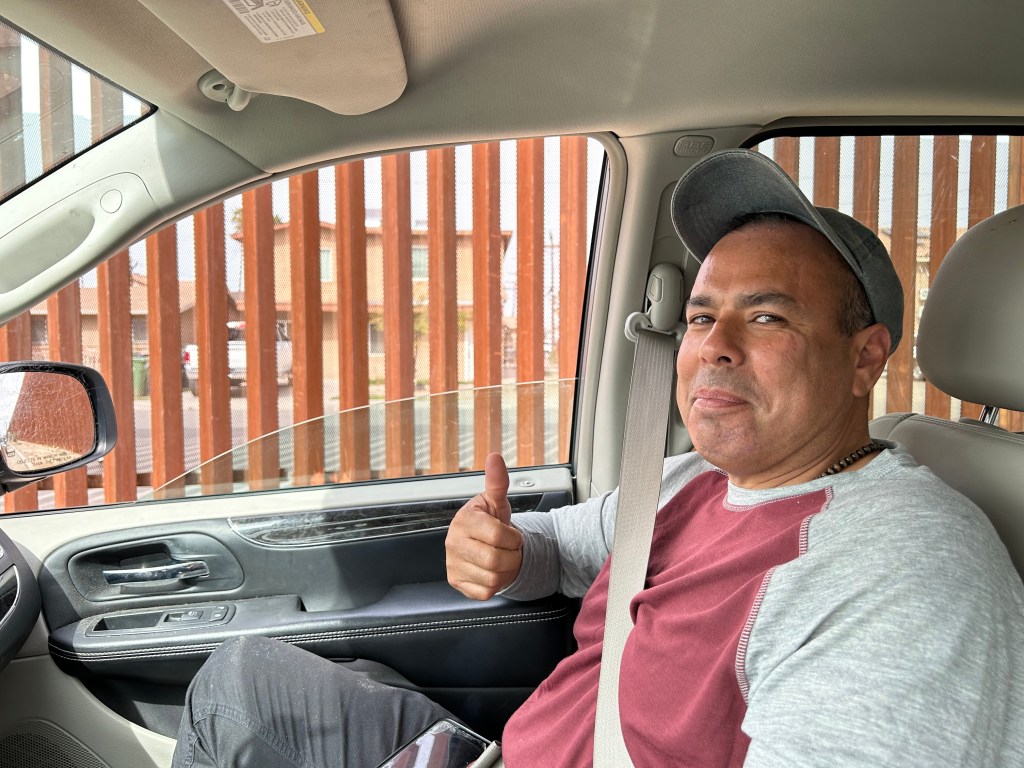
My friend Hugo met me at our usual place, just feet away from the border terminal which I easily drove through into Mexico. He hopped into my car and, within a minute, we were parking outside of the shelter.
Hugo informed me that the shelter director was in the hospital. She is the person who holds it all together there. I wondered how her absence would impact the operations of a place that seems to always be hanging by a thread.
When we were let inside with our donations, there were several visible changes since my last visit a couple of months earlier. The most obvious was a brand new large 20’ by 40’ tent installed in the center of the courtyard of the shelter. It had been provided by IOM (International Organization for Migration), a program connected to the United Nations. Hugo said that the IOM usually does not provide food, but more often donates equipment. There was also a large new refrigerator and multiple large boxes of N-95 masks. It seemed all these items were leftovers from the pandemic.


Because of my delayed arrival, I had missed the other volunteers by a day. Border Compassion, a faith-based group run from a nonprofit in Palm Desert, had just been there for a week with volunteers from San Francisco, and had provided counseling, fresh food supplies, and even a new clothes dryer. We had planned to work together to facilitate an art project with the children.
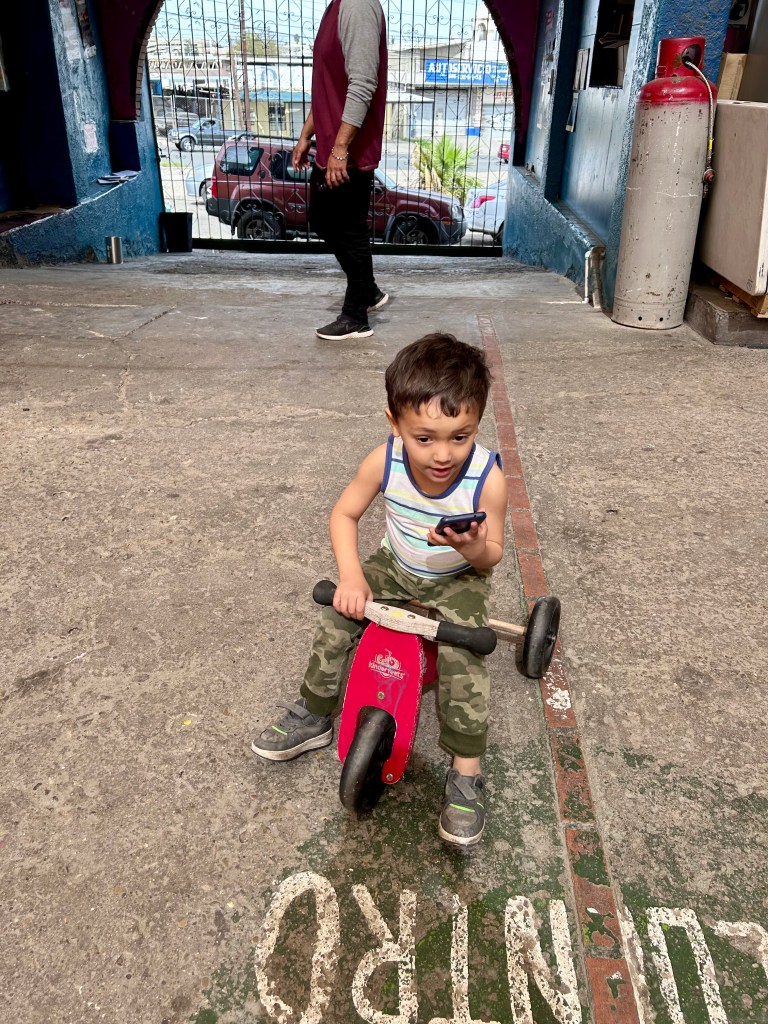
We brought in the donations of beans, rice and other non-perishables, hygiene products such as toothpaste, toothbrushes, and shampoo, toys and children’s clothes, and a few art supplies, all donated by generous Humboldt County residents. Two small children immediately hopped onto the little toy trikes as soon as I put them down. My goal this trip was to organize past donations of art supplies, and figure out what more might be needed. Then, I was hoping to do a watercolor lesson with the many donated paint sets I had brought there a year ago.

We were told no one had access to the key for a storage room holding many unknown items, which probably included some of the art supplies I was hoping to find. We asked if we could look at the two rooms upstairs designated for classrooms for the children. We had seen them back in December, and found them in great disarray, with garbage bags of donated clothing piled in each room. But, guided by a migrant mother and her young daughter, we found that the rooms had been cleaned up and organized. I didn’t find everything, but there were plenty of marker pens, scissors, lined paper, children’s books, tables and chairs, and yes, the watercolor paint sets. We even found the sample puppets I had made to show the kids the puppet-making process. It was clear to me that this mom was interested in the children having some semblance of schooling while they live in the shelter, and had made the room usable.
We went back downstairs and were told that many of the families had gone to church, and then to the Plaza in downtown Mexicali for an outdoor market, so there weren’t many children around at the moment. Sundays are the only days the resident migrants are allowed to leave the shelter. By doing so, they run the risk of being approached and coerced by Coyotes (smugglers), or even worse, being spotted by drug cartel members who might be looking for them. It became clear there would be no art lesson.
I showed the mom the donations we brought, and handed her some tablets of watercolor paper I had picked up on my drive through the desert. She took them and handled them as something valuable, mumbling something in Spanish. I could tell she knew what to do with the special paper, and would end up having a watercolor lesson with the children. In that moment, I realized that maybe my work was done. By helping others to help themselves, maybe the torch had been passed. Maybe now it was okay if I didn’t drive all those miles to offer art projects anymore. Maybe it really meant I was switching gears.
We left soon after that, and delivered the cash donations to the director who was in a hospital a couple of miles away. Then we drove up to the line of cars by the border wall and inched our way back to the US with only an hour and a half wait. I said goodbye to Hugo and hope that I can bring him as a guest lecturer to Cal Poly Humboldt someday. He has years of experience supporting migrants at the border and wisdom to share.
I will not miss the long drives down Interstate 5, and the hustle and bustle of traffic on the tangled web of freeways throughout Los Angeles. But I will miss the early morning drives into the sunrise through the Coachella and Imperial Valley desert, the colors and stillness of the sun-blanched landscape, enchanting and beautiful, yet desolate and desperate. The flat, dry land can be both serene and severe, and always treacherous for those risking their lives as they scramble through it, reaching for a better life in the US. I will miss the bright pink walls of the Posada Del Migrante shelter, and the bright and beautiful faces of the children waiting there.

As I drove away and up the coast, I was certain Northwest California is my true north. It is there I am home. And I will always be grateful for the opportunity to have experienced the moments I have shared with migrant families at the border. They will always be in my heart.
 Maureen McGarry